Tuesday, June 7, 2016

My Final Reflection.

Wow.. I've gotten so used to updating these media blogs that I can't believe this is our last reflection. I've been waiting for school to end, but the fact that we have a few days left with some of our teachers is only now starting to sink in.


These blogs have been really fun. I was able to talk about my feelings toward a few ads that I would have never told anyone else otherwise. I had the opportunity to go out and specifically look for ads and realize how seriously swamped we are with them in our daily lives.

I also learned how to use this website and how to make blogs in the first place...

Now that we're here, the end (dun dun DUN), I don't really know what to say. These media blogs certainly have trained me to question the actions and placement of actors and products, because every small detail was done in that way for a reason.

We've seen the same advertising techniques over and over again, so at some point, many of us became almost immune to them. A lot of us just brush off a commercial and the idea that they somewhat control our lives in the long run. (product wise)

I think the biggest thing I realized through these media blogs and the class itself was that commercials are advertisement. That sounded really strange.. But what I mean is that a lot of us will stop the ad block or ad skip to watch an interesting commercial. But the idea that we are allowing ourselves to be sold an idea or product or allow companies to freely sell their products with our help doesn't really kick in. I realized that by watching those commercials and allowing myself to be vulnerable to the messages of advertisement, I'm allowing those companies to grab a hold in my life and some presence in my daily life.


Why should we allow companies that want tax reforms and desire to take advantage of other countries' low worker pay, to have presence or a role in my day? I don't want to support that kind of thing and thus I'll try to skip all commercials.

What I'm saying now doesn't really make sense because I'm putting together pieces from this semester and my childhood, so there are a lot of holes I don't know what to cover with. I remember actually rewinding or refreshing the pages to watch the interesting commercial I caught a glimpse of while fast forwarding. I think back to that and still ask why I would go so far to allow the brand to freely take away part of my day.

Overall, there were many things that I learned through the media blogs and Critical Thinking class: from the surprising statistics about women's role in the US, to the known but now labeled and categorized advertising techniques, to even the fallacies.

I can't name and give an example to everything I learned, but the media blogs have mostly pushed me to purposely go out and see the changing and updating media. I used to avoid a lot of social media and anything in the world because it took so much effort to find those things out and also a lot of my feelings to empathize with a world event. (Sad current events do take a toll on me..)


But I'm beginning to realize that hiding away as a hermit doesn't do me any good. I have to force myself to get out there and stay updated, especially in this racing society. Unless I want to be left behind with no knowledge of what is considered the easiest type of technology (already halfway there...), I have to grind my teeth and push my feet forward, even if my mind drags along.

Media blogs make me question, will we ever slow down? If we do slow down, will it be from a crash? When will we ever find the true balance between the modern and traditional? Is there even a balance?

In this changing society, all you can really do is grab hold of the speeding trolley and hope that you end up at the right destination at the right time.

Goodbye Media Blogs. For now. :)

Escaping Reality.. Just How Desperate Have We Become?

ZocDoc Lets You 'Escape' the Doctor's Waiting Room with Virtual Reality

ZocDoc is a pair of glasses that allow the user to see a whole different scenery. It was invented and placed in the waiting room of a dentistry to bring some pleasure to bored patients. The sceneries were of green meadows and horses or a blue pond with encasing rocks, and more.

All of the scenes were of nature, so I can understand why it would help those who are a bit anxious to meet the dentist. But if this product was marketed just so that patients have something to do during the wait, I begin to worry for our generation. Those types of inventions are cool and all, but there have been multiple instances where a video game player used those types of glasses to fully experience the game and ended up in a mental asylum. I just think warping our current reality is a bad idea from the getgo.

The moments that we just wait in silence is also important, in my opinion. Like Mr. Tagg says sometimes, there isn't enough silence in this generation and society. There are noises and music everywhere. I personally am privileged to go to the mountains for a weekend every summer, so I enjoy those peaceful moments where you don't hear any cars racing by but only the distant creek and leaves rustling from the slight breeze.

My overall reaction to this invention was, what is becoming of our society. More inventions because of more creativity and inspiration. I get that. But why not lean towards some specific inventions and forget those that could cause some serious psychological damage.

I personally think having to take off the glasses when your name is called in the dentist room and then face reality and a dentist at the same moment is not worth putting myself in the vulnerable situation in the first place.

The Link Between Modern and Traditional

Telecom Giant SoftBank Adapted Digital Comms for an Older User

This ad is about Telecom teaming up with a man named Hiroshima in Japan. His mother has never sent a email in her life and lives on an island with the lowest technology using rate. Hiroshima moved to the city with his family so that his children could experience more things, but that left his parents to miss out on the childrens' growth. So, Telecom teamed up with Hiroshima to modernize the tools that the mother already used in her daily life. For example, SNS could be printed out as a newspaper format from a printing tool inside her mailbox and a robotic box that encases the pole in her house records the childrens' height every time Hiroshima uploads or updates the software.

I think this was a great way to connect with people who are reluctant to adjust to the modernizing world. All this new technology is hard enough for high schoolers who are expected to know how to use a Mac and imovie while not even owning a computer or laptop. So, how can we expect the elderly or just the older generations to adjust just as quickly as us?

This modernization and adjustions probably cost a lot of money, but I think it's worth it if it allows the older and newer generations to find a middle ground.

What Did I Tell You?


Dove's "Amazing Love Story" Ad

I meant to update this post two days ago, but here it is now.

To those of you who caught onto this during my group Dove's presentation, you should remember this ad.

That's right, the famous love story revolving around Dove's deodorant.


Dove's advertising techniques are sometimes very subtle or very abrupt. For the beauty patch, I would consider it to be a very subtle commercial because though the fake patch was made by Dove, there was no mention of Dove until the very ending logo.

So, when comparing the beauty patch to this love story, I would have to say the love story was pretty abrupt. I almost missed it, but Dove's little dove is shown n the bottom left corner in the beginning of the video. Unless the viewer caught onto that, the commercial must have been very confusing at the end because Dove comes out with the line, "The sweatiest moments are some of the most precious." It just seemed like a very bad product placement at the end.

This commercial was one of those that you ask, "What?" at the end of because you didn't catch on that it was an ad (not a story) until the very end.

Sunday, June 5, 2016

Old Spice and Screaming

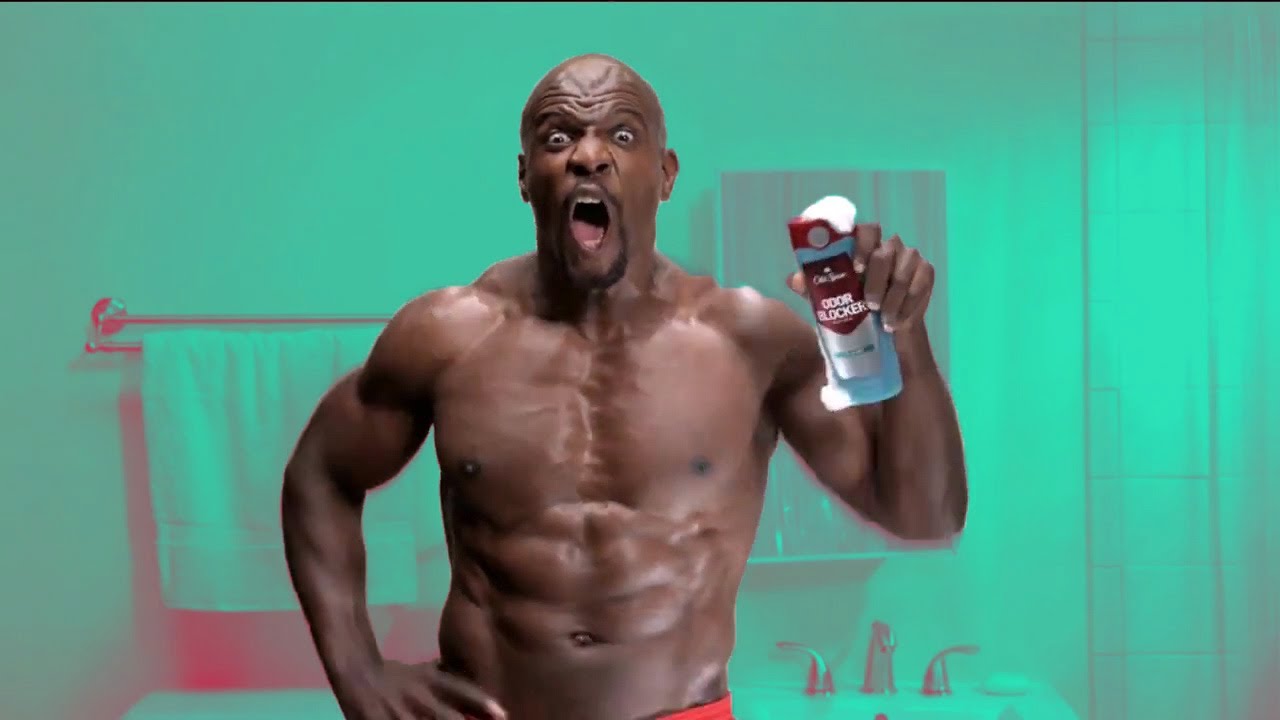
Terry Crews in Old Spice commercials

I've heard a lot about the Old Spice commercials with Isaiah Mustafa, so I decided to see the ads myself. Turns out, he is good looking and advertises Old Spice in the weirdest scenarios. The ads itself were really strange...

But while I was watching some videos, I noticed that one had Terry Crew in it. This led me to watch all of the Old Spice videos with Terry Crew in it (link) and I don't really have an opinion on Old Spice now.

There was a lot of screaming (which is common for Terry Crews) and a lot of weird transitions and scenes. I'm not really sure what to make of the scenes... There were exploding faces, exploding bodies, muscle-movement-powered-sound system...

If the association that Old Spice is going for is weirdness and crazy fun, I think they are succeeding. But there's a different motive involved, I'm not sure what it is and if it worked. Terry Crew is a very funny person and well known in the media, so we can say that they used a celebrity to sell their product.


Sunday, May 29, 2016

Miss Representation


Miss Representation (2011).jpg


Miss Representation.

The statistics in the documentary were very shocking and eye opening. I knew it was bad, but I didn't know it was this bad. Miss Representation was released in 2011, but from what I see in the media today, not much has changed. Sure there are more activists and mentions about feminism due to big celebrities, but there hasn't been much change in the government roles and corporation memberships. (At least I don't think there has been.)


There were a few quotes by the women that were interviewed that stood out to me. These two were some of them:


Katie Couric's quote is really true because the media can be used for both ways. It can be used to lift and change the way women are percieved and what they are assumed to be, or they can worsen the value of women and their capabilities.

Carol Jenkins' quote was my overall favorite. Women make up 51% of the USA population (from 2011) yet represent a whole lot less than that. So when Carol Jenkins says that what you know about yourself and your country and even your world comes from the male perspective, she is right on point. The media affects our behavior, speech, thoughts, everything. And males dominate the media (well, at least are more represented than females), so that gives them a huge advantage in business, law, everything you can name. I love that she says it's not wrong, but just not democracy. In this way, she is not denying males of their perspectives, but just saying that there is an unbalance in representation.


The other thing I wanted to point out from the documentary was the photo shopped images of models. The left is a photo of the actual model, and the right is the model photo shopped. Personally, the picture of the right is kind of uncomfortable to look at... but that's not the point I want to make. The point is that the documentary said, "The media makes unrealistic expectations for women." Or something along those lines.

We are creating an impossible image that we cannot achieve naturally, and then hate on others and ourselves for not achieving it. I think it's kind of ironic because a lot of people look at these images of models and then strive to be like them: skinny and tall and pretty. But the fact that these visuals are not achievable completely destroys the process.

I'm not sure if my thoughts are being explained in a comprehensible way, but it just seems like a sad ironic tale that doesn't seem to have an end.

Old Vs. New


"Today's Generation"

I've always wondered about the future of our generation. Our generation is the one when all this new technology was made and when new disorders and even diseases arose from overuse of technology.

I can across this picture as I was researching for an earlier post and I found it to be hilarious because it is sadly true.

I remember in sixth grade when I got my first phone. It was a touchscreen but one of those 1 cm thick androids. I could finally text and call but I had no access to the internet or any apps or games until I got a new phone in eighth or ninth grade (Samsung S3). I also remember seeing friends of the same age owning multiple ipods and an actual iphone in sixth grade, and when we were in middle school, fourth graders already had the new iphone 4s.

My family is still "old-fashioned" compared to others in America because we use Windows 7 (or did before the computer automatically updated to Windows whatever its called), use older versions of Samsung and flipphones, and also print out pictures and put them in photo albums. Gasp. What are those?

Photo albums are like scrapbooks, only you usually only fill it with pictures and no decoration or arts and crafts. Just so you know.

I might sound like a know-it-all or an arrogant person, but from the results of the newer generations (some kids can't read an analog clock...), I seriously would not be surprised if some of you never used a photo album before. So many parents and people in general take so many pictures with their phones and most people never bother printing it out and filing it away in an album.

In fact, I remember reading this post on facebook a few years back that mocked the coming generation. It talked about how future mothers will pull out their iphone 1 and 2 when the son-in-law comes over to show him baby pictures. It won't be like back in the day with actual photos.

I just.... I don't even know what I have to say. It's just a huge shock and kind of baffling moment to internalize this change. I still have stacks of albums in my living room from the 1900s (don't worry, it's a joke..) of my parents, and I continue to print out pictures I take on my phone to put into albums.

I think we should continue to print out and file away important photos. Phones can take a lot of photos, but they are sometimes very undependable and erase all your memory. Rather than risking losing all your baby photos, wouldn't it be better to print out the most important ones for the future?

Meet "Baby Scumbag"


"Baby Scumbag" arrested

To those of you who watched Generation Like, you've already met "Baby Scumbag".

He was a thirteen year old skater boy from Compton, California. Now, he's a fifteen year old facing sexual assault charges.

When Steven Fernandez (real name) came out on Generation Like, he talked about how YouTube was his way to help out his family. His family didn't have much, so he learned early on about how important money was. He even told Douglas Rushkoff that people need to stop worrying about followers and worry about the money. Steven was pretty modest about his popularity on YouTube and continued to hang out with the neighborhood skater boys.

His talent in skateboarding helped him achieve followers on YouTube, but his real fame came when he began to do some outrageous things to get attention. From holding random people's hands to asking out/annoying women, Steven gradually left his skateboard at home to shoot his videos.

Later, Steven admits that he's not the best skater on the block. His friend, who was a few years older, only had up to 38,000,000 views on YouTube and it was the one that featured "Baby Scumbag". When asked why he thinks he doesn't get enough views even though he is better at skateboarding, the friend flat out says that it's because he doesn't do outrageous things like Steven does.

Steven raised money through sponsorship. He was literally covered from head to toe in advertisement. His hats, shirts, shoes, skateboards, almost everything that would show up in the video, was from sponsorship. "Baby Scumbag" gladly showed off brand names because all he wanted was to earn money to support his family in any way possible.

Though his methods were skeptical and borderline assault, his intentions were pure at that time.

Few years later, in December 2015, "Baby Scumbag" was arrested at age fifteen for committing lewd and lascivious acts with a child under 14. When his profile was released in January 2016, more victims spoke out.

I can't say I didn't see this coming. Not the assault, just the legal trouble. The videos he produced solely for attention were alarming to begin with. He seemed like a small boy trying to get some laughs at first, but soon enough, the sexual content and visuals got way too intense, way too fast. It felt like he was being sucked into this world where every girl and woman is an object with attractive features.

The way he spoke about and to women in his older videos showed that he didn't really understand what it meant to respect women and just all genders in general.

I looked up his name shortly after finishing Generation Like to see how his life is now, and the first link that popped up was a celebrity news report about Steven being involved in a sex scandal.

I have a lot to say about this, but I don't want to make this post too long, so I'll end with this comment: Children have to be taught at a young age about respect and proper behavior. Violent, aggressive, or cheeky behavior cannot be shaken off with the simple comment, "they're just kids." Kids become teenagers and teenagers become adults.

Watching this video may help you to understand what I mean:

"He Did It Because He Likes You"


Sunday, May 22, 2016

Adding On To Generation Like


The first post was mostly just for comparison to Merchants of Cool and my personal thoughts on the video. This post is more about what was in the hour long film and major points I want to share.


In the first few minutes of the film, Douglas Rushkoff mentions how back in their film in 2001, corporations were desperately chasing down teens and what was hip, but now teens are directly telling them that they don't need to be chased because they publically put out what they're interested in. He also mentions how in the focus group, the teens were very interactive and seemingly more sophisticated. However, as they talked, they had one vulnerbility: likes.

Many of the teens Frontline interviewed used the word "empowered" or some reference to having control over what they do online. Rushkoff questioned if this was really true. And this goes back to the big question on the cover poster for Generation Like:

"Are kids using Social Media or is Social Media using kids?"


It becomes very clear after watching the full film that the answer is the latter. Social Media is definitely using kids.

How? Simply through what they call interactions and what we call memes, sweepstakes, and contests.

Rushkoff says this exact line: "It may be catching fire, but it was doused in gasoline beforehand." This was said so perfectly, that I can't even explain it in a simpler way.

He is just referring back to how companies are offering fame by association through such obvious and transparent ways that Rushkoff questions if it's really just invisible instead.

I think I already implied what their marketing strategy was, but just in case: Instead of selling the product to consumers directly, marketers want consumers to sell and advertise their product for them. In this way, the interaction seems more open and transparent, but really was planned very carefully.

Other than contests, a big way to get consumers engaged was rewards. Kiip is mentioned in this film, and how the company pretty much gives out points if the app user does something, and every time they reach a certain threshold, they get a free coupon for something. This seems like the user gets free coupons for doing what they normally do, but in reality, the marketers are able to put their name out there more and spread their new sales or stocks.

The president of Kiip specifically mentioned that they use words like rewards and moments, never media or advertisement. He called it, psychological design.

It's pretty clever and true. I think if I were to hear the latter words, it would break this harmony between my benefit of getting free coupons and being used by Kiip and other companies in their marketing strategies.

I want to end this blog by just diving into the analogy used to end the film: The Hunger Games. (It really wasn't random because one of the interviees was a major Hunger Games fan, so there was a lot of mention to the movies already.)

They said that we, the teens, are the teens who fight in the Hunger Games. The arena in which we fight is the vast and unpredictable media and technology. To survive in this harsh environment, we need sponsors (ALERT. DOUBLE MEANING) to help us get through this place. But to get sponsors, we need people to like us. We need to be liked (I HOPE YOU SEE WHERE THIS IS GOING), to survive.


Generation Like... It's Been Thirteen Years.


So Generation Like is like the updated version of Merchants of Cool.

In Merchants of Cool, marketers chased around looking for what teens thought were cool and tried to "sell the teen culture back to them." In that video alone, marketers had trouble getting the members of the focus groups to interact and just voice what they were being payed to speak about.

In Generation Like, marketers have found out that the method of advertisement has completely changed. It's no longer about who is cool and who is cool. "It's all about the likes." The likes are part of an endless cycle of advertisement that companies love and try to take advantage of. Most of the time, we let them.


Take Facebook for example. As I mentioned in my first blog, I use Facebook more frequently than any other form of social media. So I can say this with certainty: The moment you like something, you are advertising whatever you liked to all of your friends on Facebook. All as in all 100 to 300 friends you have on the website. No matter what type of friend you are labeled under (as acquaintances or close friends), unless an individual goes out of his or her way to mark that they do not want to see any of your posts on their wall, your "liked" post will appear everywhere.

I personally try to not like too many things for this reason. There is no way of not spamming everyone's walls unless you unfriend everyone. But many people don't do this. They like whatever they see, whether it's a friend's picture, status, or even plain advertisement.

I realized after watching Generation Like that I have been purposely avoiding the "like" button on advertising sites because I don't want to spread their product or their name around for free. It makes me feel like a tool and used. With clothing, I have no option if there is a brand name on it, but for social media, it's all within my control.

It's like what the director of The Audience, "one of the world's largest multi-channel publishers of social and digital content," said, "You are your own media company, 100%"

I really like this idea that you can't control a lot of things in life, but you can control your own media profile. There was a focus group in this new video and they talked about how a profile picture is showing who you are and what kind of person you are, while the cover picture is showing what type of personality you have. I didn't really think about this before, but they were absolutely right.

If someone had a cover picture of just themselves, they seemed really self-conceited and full of themselves. But if it was a picture of them laughing with friends or doing what they love, it made you appreciate how down to earth or homey they were.

This might sound bizarre and weird to those who have not had a Facebook as long or as early as I have, since the rage is Snapchat today. But there were some crazy realizations after watching Generation Like.

I think the biggest and kind of upsetting point that was mentioned in the video, was that before, if you didn't have the right connections, all you needed or could have was hard work and skill, and even there there was no guarantee. But now, all you need is the support of major media controlling companies like The Audience and build the right type of profile. In cases like this, having talent comes second.

And just the idea that likes are a currency is also so crazy. I think we just have to take a minute to think how powerful we really are in today's world. Our likes and shares, though it may be a simple click or a few seconds of our time, is hours and thousands saved by major companies because we are "working as hard as the marketers are in getting the message across."

The Unlimited Possibilities With Technology


Life Saving TV is a project made by the companies KT and Cheil. It's a project specifically for the elderly who live alone. The video talks about how in Korea, the majority of elderly live by themselves and in the rural areas, putting them at a great risk.

Using the fact that almost all elderly have a TV no matter what financial state, the Life Saving TV project is being used to notify family members, social workers, and care workers. Because the older Koreans turn on their TV as soon as they get home, the Life Saving TV sets up a connecting system so that a message will be sent to specific people to alert them that the tv system has not been touched (has not been turned off/on, changed channels, changed volume, etc.) in the last 24 hours.


I personally can confirm that many elderly live by themselves in the rural areas. This is because their children were among the first generation to dedicate their lives to modern, technology-filled cities. And because these children marry and have their own families, they raise the children in the city and eventually end up either living with grandma or leaving grandma to herself a few hours away.

It is also very true that everyone has a TV. A TV and a home phone (the hand dial version) are necessities of a Korean person. Using this to create this project is ridiculously clever and smart.

The descriptions say that the project is reaching positive outcomes and is planning on spreading this to the rest of the world and not just Korea. I hope the positive project becomes a positive reality for many independently living elderly around the world.


Saturday, May 21, 2016

Sarcasm? Warning? Threat?

Wathan Funeral Home
Is this what you call, "Sarcasm at its best"?

As you can see from this billboard, it says "TEXT AND DRIVE," (a message completely opposite from what you hear from adults) and then the advertisement sponsor at the bottom: Wathan Funeral Home.

This is a very dangerous advertisement, in my opinion.

I personally think this ad was well thought out because no one really expects to hear "text and drive" from anyone, only the opposite (don't text while driving). This message catches people off guard and gets them interested. When viewers start thinking, "What did that say?" or "Did I just read that correctly?", that's a successful advertisement.

However, there are very sensitive people in the world, and seeing these kinds of advertisements will set off bombs. I can't imagine how those people reacted to the sarcasm published in black and white for all to see and read. I just hope this funeral home didn't go through one of those cliche law suits were someone got offended and won in court.

Ways Around Censorship


So the Macma "Man Boobs" Self-Examination Demo's main goal was to model how to check for breast cancer using the boobs of a bigger male. The reason for this was because women's boobs are always censored and it is difficult for health-concerned women to understand the procedures if the details they need to know are blurred out or covered up by icons.

The video shows a woman with her face cropped off. She takes off her only article of clothing and her boobs are censored with icons. At this point, the narrator is explaining why there is this woman and why she is shirtless and braless. As the narrator continues to explain how they are planning on using the bigger male's boobs to demonstrate how to check for breast cancer, the larger male walks out in front of the half naked woman, with his head also cropped off. The woman doesn't leave, but her arms come out under his underarms and begin doing what the narrator says you should do to check for breast cancer.

I think this video deserves a lot of credit because they really wanted other women to know these details that were previously blurred out and because it was just made well.

It wasn't particularly made to be funny or have intentional jokes, but it had a kind voice and was recorded so professionally that there were no doubts on their positive intentions. (There was nothing fishy, I guess.)

I was kind of freaked out at first because I wasn't sure why there were so many half naked people on my screen. But after watching the full video and the description, I began to really like the whole concept. It's a clever way around the censorship, and it was done under positive intentions, which made it even better.

Too Dramatic Is Also A Problem


I remember we talked about how movies have sneaky product placement. We also talked about how there are movies where a product is presented to writers and told to build a story around it.

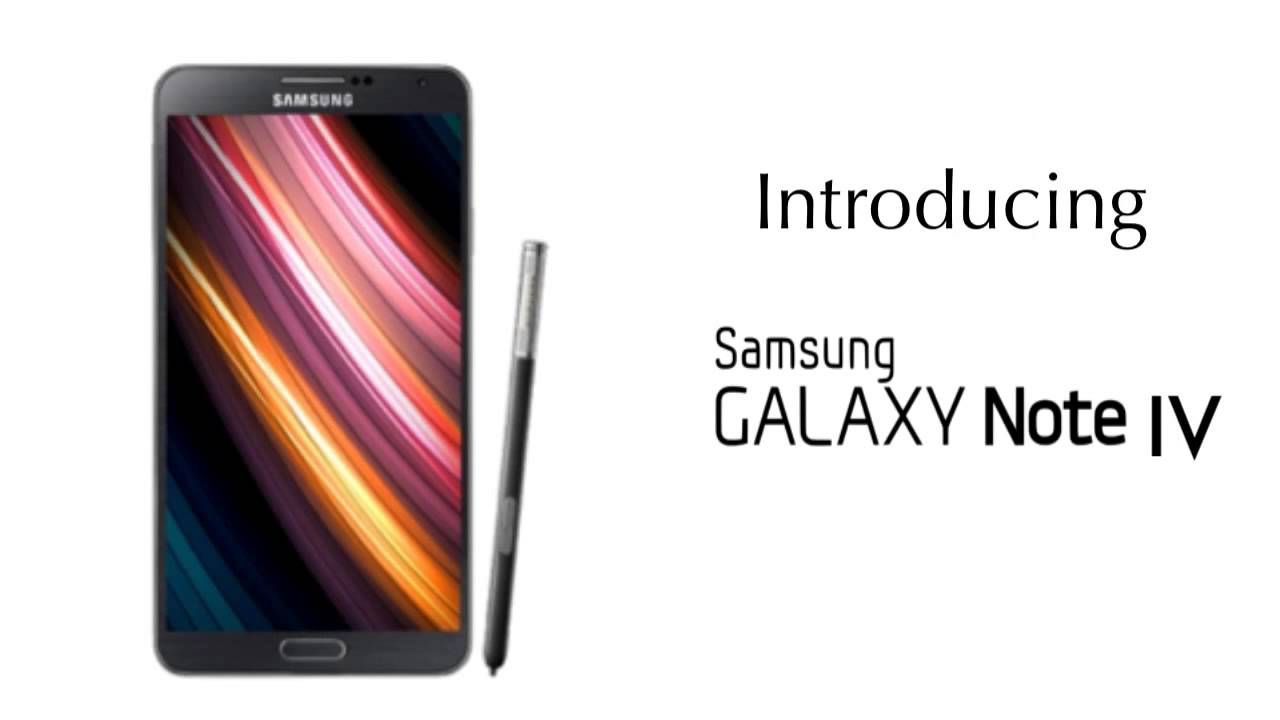
Well, this ad for the Samsung Galaxy Note 4 is a very good example of how a story is built around the product.

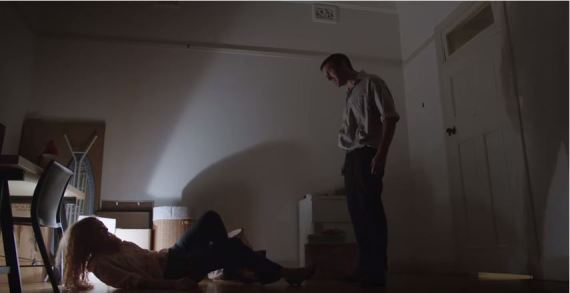
In the advertisement, a man narrates his life. He has an interactive job and exciting friends who he works with. Everyone is all smiles and up until he leaves work to go home, the man narrates for himself. It starts off as an ordinary drive home, until a motorcycle suddenly emerges from the left block and crashes into his car. In the next scene, all his friends (and I mean like 10 coworkers) march into the hospital with "Get Well Soon" balloons and an inflatable dressed up woman, with laughter and jokes. They all greet the man's mother who is sitting quietly outside with an obnoxious voice and it is only when they all turn to their left and see their friend through the window that only silence fills the air. Rather than seeing their friend laying back on the hospital bed with a lazy grin and just a harmless cast around his arm, they saw their black and purple spotted friend drinking soup with his left hand, because his right hand was missing. There were bloody bandages around the area of his missing body part. The friends eventually get the man's attention and they all have a very sincere and heartwarming exchange of messages.

How could the man reply back with only his nondominant hand, you ask? Because he was using the Samsung Galaxy Note 4, of course.

It's a very touching story, and a possibly true one. But I knew it was two minutes in, after the two parties had exchanged at least one message each, that I knew it was an ad for the phone.

Whether it was because of these media blogs or because the product use was too major in the plot, spotting out the true message of the commercial was fairly easy.

And personally, the story was great and the use of the phone was also great. BUT, it seemed like the plot was a bit too dramatic to simply end with a reference to Samsung Galaxy Note 4.

Sunday, May 15, 2016

COME ON...


Durex Livestreamed Couples in Bed in China. For three HOURS.


Yes. I know. I know.

And it's actually real. Like, no joke.


So to those of you who do not know who Durex is, (I actually didn't know either until I looked it up..) it is a company that sells condoms. According to the video description (link), Durex is "one of the most edgy and cheeky brands marketing in China." The company is also told to have advertisement that "focuses entirely on social and digital media, with funny viral posts that have made it a hit with youth."

And now, they have released a three hour livestream of fifty couples in bed. Honestly, this is scary to me. I get that their target is the media and the youth but seriously?

On the bright side, it apparently "doesn't include most of the things you think it will." 

(It is a three hour advertisement that I am not willing to waste my time on, so the description is coming from the website itself and my ideas are based off the first few minutes where all the couples were still listening to the director and stretching.) 

So this is what happened according to the website:

"50 couples were sitting in white beds, wearing white bathrobes and slippers, playing with condom boxes. Screenshots shared on social media showed the couples doing calisthenics, eating bananas and chatting. The 'climax' was a puff of white smoke erupting from a giant Durex box. Maybe it was a metaphor for something sexual. To some it seemed to signal that this was all a lot of hot air.

"Some doubted whether the program was really livestreamed. One commenter on Weibo called it 'the most boring live show in history and the most unsuccessful marketing case in Durex history.' Another viewer vowed to only use other condom brands in the future. The company's marketing department didn't return an email seeking comment.

"On the other hand, people were definitely talking about the brand. And according to Chinese media reports, 5 million people tuned in across multiple video platforms."

I wonder what you guys were expecting before this summary...

But my opinions are fairly short.

I don't have any huge resentment to this ad. These types of ads just come and go, I think.

There wasn't anything weird so (well they say so anyway) I think it's a weird way of getting their name out there but I guess it worked for those 5 million viewers...

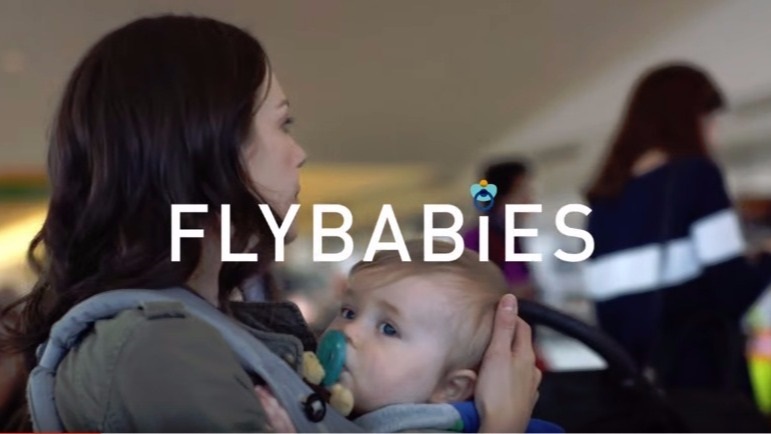
Babies on an Airplane. Yay?

How many times have you been on an airplane? How many times have you been on an airplane with a baby few seats away? How many times have you been on an airplane with a baby screaming in the seat right in front of you?

Personally, I have had a very upset baby sit in front of my seat during a 12 hour flight. It was a very long and very loud trip. And maybe it was because I was too busy listening to the music from my headphones or reading the HISP summer book in front of me, but the baby's voice wasn't too difficult to mute out. What I mean is, as long as you concentrate on something else on the flight, the baby's cries were perfectly bearable.

This Jet Blue Ad made me have some mixed feelings about people who are very upset at the idea of being on the same flight as babies. Not only are their dirty looks making the helpless mothers more stressed and self-conscious about being on the flight, they are completely unnecessary. We all get that you all want some sleep or some quiet time, but you have to understand that it's not the mothers' or the babies' fault. The air pressure is painful for me, so I can't even imagine how painful it is for the babies.

The video showed interviews of newborn mothers and surely enough, all of them said that the worst thing that could happen is that they become that mom who can't control their child (which is not always the case). And of course, the reactions of the people who sat next to the newborn mothers were very negative. It seemed like any other flight until a flight attendant spoke through the speakers that this was a special flight because every time a child cries, it is 25% off every single person's next Jet Blue flight. The first baby's cry (25%) had no reaction from the passengers. The second baby's cry (50%) had a small applause. The third baby's cry (75%) had a few hoots. The fourth baby's cry (100%) had people standing up and smiling brightly at all the babies next to them.

I think the concept for this ad was very clever and it certainly makes me have positive feelings about Jet Blue. BUT, the other passengers still make me upset. Like, do you really need a 100% off your next Jet Blue flight for you to give newborn mothers, and just mothers in general, some respect and courtesy? Must your manners revolve around money and your own benefits?

Maybe I'm being a little sensitive but because I've personally gone through the experience, I don't think any one deserves some "slack" for being rude towards a mom on a flight.


Jet Blue's Mother's Day Ad

Saturday, May 14, 2016

Purely Psychological


So the Media Project in Mr. Maxwell's class led me to Dove's Beauty Patch, the RB-X.


The advertisement is more like a campaign about Beauty being a state of the mind. The video starts out with ordinary women coming into a room and speaking to a psychologist who also studied the human body for almost thirty-five years. They tell her how they feel about themselves and openly admit that they probably judge themselves harder then others do. They are told to keep the patch on for twelve hours and record a diary every day.

When the women come back a few weeks later, their attire is noticeable brighter and stylish. All the women say that they now feel comfortable in their own skin and that wearing tight clothing is not so distressing anymore. When told to flip the patch covering over to see the ingredients of the patch, the camera zooms in to show one word: "Nothing."

Dove's campaign, "Beauty is a state of the mind", was very well done, in my opinion. The website of the campaign says that only four percent of women globally feel pretty or like themselves. That's pretty severe. So ninety-six percent of women globally don't like themselves or feel beautiful. And the reason is simply the "perfect body" or guidelines society has set through social media.

Diversity in age and ethnicity of the women yet similarly in how they perceive their own beauty before the patch is what really made this ad stand out.

Dove's Beauty Patch

Dove + Weather Forecast = Pretty Awesome Ad


Dove has really taken advertisement to a whole new level.

Recently, Dove released an ad in Times Square about Body Wash. The company had been keeping track of the weather and rain patterns to release this video at the perfect time, during the rain.

The video is of a woman named Alice who takes a shower at the same time rain starts to fall on Times Square. The Body Wash is rubbed onto Alice's skin (like any other Dove ad) but it is even more noticeable and eye-catching because of the timing. Women stopped to take photos and videos of this advertisement and were mostly smiling in the video.

I think it was a pretty good idea. I would have never thought of it, but to research that far to know when the perfect timing is... It's a pretty amazing video. I think I would also stop and take a couple pics and a video from just the pure amazement at the timing of the video.

If Dove uses weather forecasts for their ads, it makes you wonder what else they could use or are already using for their benefit?

Dove's Smart Billboard On A Rainy Day


Friday, May 6, 2016

Free Beer?


Who knew advertisement could be taken to the extreme? I mean, everyone did, but many of us may have to change our mind after seeing some of the banned ads. A specific ad I'm referring to is the Bud Light "Clothing Drive" commercial that was released in 2010.

Bud Light | "Clothing Drive" commercial

It's not as bad as the other banned ads on the Super Bowl Commercials site, but this Bud Light Ad was number one on the list. And I have to say, the ad was very well made.

It's about an office worker organizing a Clothing Drive and trying to get her coworkers to help donate for a better cause. No one is really interested in helping out until she mentions that you get a free bottle of Bud Light for every article of clothing you donate. Soon, workers are running around and participating in their business meetings first shirtless, then half naked, and by the end of the commercial, completely naked.

Some of the advertisement I've seen for burgers back in 2010 were more racy and inappropriate than this commercial, so I found it weird that this video was banned. There was a black box covering men's lower region and a women's upper and lower areas. So there was no cleavage whatsoever. The advertisement was also funny because as the word about free Bud Light spread throughout the office, those who had not heard about it gave them judging glances.

Not only was the video humorous and attention-gathering, it also got its point across: Bud Light is worth it. By the end of the ad, viewers are able to say, "Wow. Maybe Bud Light is really worth walking about my workplace completely naked." That's not what they would really say, but it has a comedic ring to it, no one would think negatively of the ad.

In my opinion, I would rather have these kind of commercials where the private areas are completely covered and promote alcohol rather than provocative scenarios of men and women just for some blobs of mixed "meat" they call hamburgers.